Buying land near Shawano can feel simple at first glance. You see a few beautiful acres, a tree line, maybe a pond or road frontage, and it is easy to picture your future home right away. But with vacant land and rural acreage, the real question is not just how much land you are buying. It is what you can actually do with it. This guide walks you through how to evaluate vacant land and acreage near Shawano so you can make a smarter, more confident decision. Let’s dive in.
Start With Location Rules
The first step is to confirm exactly where the parcel sits and which rules apply to it. In Shawano County, some towns fall under county general zoning and others do not, while villages and cities are outside county general zoning. The City of Shawano also has a 1.5-mile extraterritorial planning area where subdivision review, extraterritorial zoning, and an official map may apply.
That means two parcels with similar acreage can have very different development paths. Before you focus on price or views, make sure you understand the parcel’s jurisdiction. A small difference on the map can change what is allowed.
Verify The Paper Trail
Before you judge whether land is buildable, confirm the basics. Use county GIS resources, parcel maps, and property listing records to verify the tax parcel, legal description, and current mapping.
This step helps you make sure the parcel being marketed matches the parcel on record. It also gives you a better starting point for questions about access, zoning, and future use.
Check Whether Future Splits Matter
If you think you may want to divide the land later, ask that question early. In Shawano County, a Certified Survey Map is required for many land divisions, and the county notes that early consultation can help reduce delays.
The county’s land division rules also require consistency with the comprehensive plan, zoning ordinance, floodplain ordinance, shoreland ordinance, and public health and welfare standards. If future flexibility matters to you, it is smart to evaluate that before you write an offer.
Review Zoning And Preservation Status
Some parcels come with extra limits that are not obvious from a listing photo. Shawano County notes that parcels zoned FP, or Farmland and Forest preservation, may require staff review to determine whether development rights exist for that specific parcel.
In plain terms, a parcel with enough acreage may still not be buildable the way you expect. If your goal is to build a home, cabin, or other structure, zoning and preservation status should be one of your first checkpoints.
Evaluate Legal Access First
A beautiful parcel is far less useful if legal access is unclear. Shawano County defines legal access as nonexclusive vehicular access to a public street with a minimum 33-foot easement width. Under the county ordinance, every residential lot or parcel created must have ownership or an easement for a 33-foot access street that connects directly to a public street.
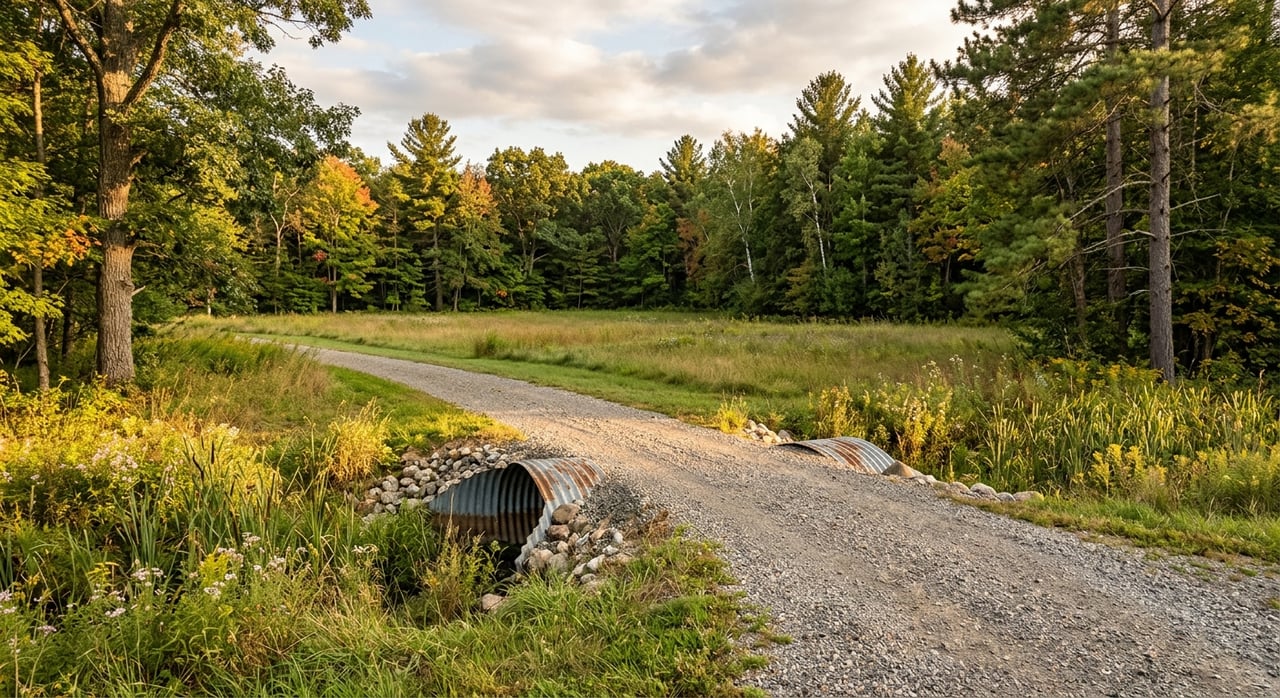
This is why road frontage and driveway access deserve careful review. Even if a driveway already exists, you may still need a driveway culvert permit and 911 address or fire number approval.
Study Soils And Septic Feasibility
For many rural parcels near Shawano, septic feasibility is one of the biggest make-or-break issues. Shawano County says soil type largely determines what POWTS, or private onsite wastewater treatment system, can be used. A certified soil tester must complete the soil and site evaluation for lots that cannot connect to municipal sewer.
If public sanitary sewer is not available, an approved POWTS is required for buildings intended for human habitation or occupancy. The county also states that no sanitary permit may be issued until the system is approved. That is why septic feasibility should be one of your earliest due diligence items, not something saved for the end.
Understand Utility Realities
Vacant land often looks cleaner on paper than it does in practice. If public sewer is not available, you need to know whether the site can support a septic system. You should also think through how utility easements may affect the usable part of the parcel, especially if you may split the land later.
A large parcel can lose a surprising amount of practical use if access areas, easements, setbacks, or natural features limit where improvements can go. Looking at the full building envelope is usually more useful than looking at acreage alone.
Review Well Information Carefully
If the parcel has an existing well, or if you are planning for one, do not skip this step. Wisconsin DNR keeps well records that can help you understand an existing well’s construction history.
Wisconsin DHS recommends annual testing for bacteria and nitrate and testing for arsenic and lead at least every five years. If there is already a well on the property, ask for records and recent water testing information as part of your review.
Watch Topography And Drainage
Wooded or rolling acreage can be appealing, but topography affects both cost and usability. Shawano County’s fill-and-grading guidance notes that fill near navigable water may require county shoreland permits, wetlands cannot be filled without DNR approval, and slope can change permit thresholds.
The county also warns that fill causing drainage problems can create legal issues with neighbors. In short, a parcel that looks peaceful after a dry week may present very different challenges during wet seasons or after site work begins.
Screen For Wetlands Early
Wetlands are one of the most important land-use screens for acreage buyers. Wisconsin DNR advises buyers to use its permit viewer to screen for wetlands and notes that a wetland identification service or professional delineation may be worth considering when a parcel appears affected.
Mapped wetlands are not 100 percent accurate, so field conditions still matter. If the build area, driveway route, or septic area may overlap wet ground, you need that information early.
Check Floodplain Before You Commit
Floodplain review should happen near the start of your process, not after negotiations are far along. Shawano County’s floodplain ordinance regulates special flood hazard areas identified on FEMA Flood Insurance Rate Maps and related DNR-approved studies.
The county directs buyers to flood mapping to check both the proposed building site and access route. That matters because a parcel is not just about where a house might sit. You also need practical access in and out.
Know Shoreland Limits
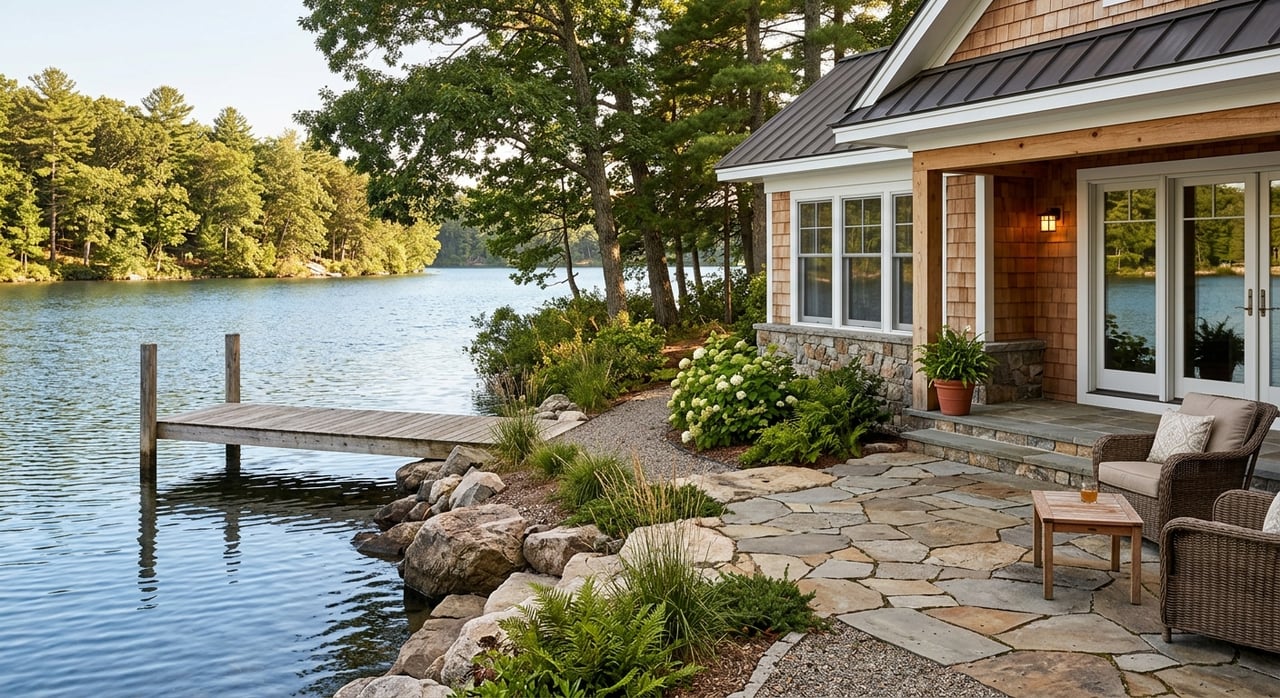
Shoreland parcels can be beautiful, but they come with extra rules. In Shawano County, the shoreland district covers land within 1,000 feet of navigable lakes, ponds, or flowages, and within 300 feet of navigable rivers or streams.
County shoreland materials also reference a 75-foot principal-structure setback and a 35-foot vegetative buffer from the ordinary high-water mark, with limited exceptions. If you are buying near water, it is important to ask not just whether a home can fit, but whether the driveway, septic field, garage, and future additions can fit too.
Think In Terms Of A Building Envelope
One of the best ways to evaluate acreage near Shawano is to stop thinking only in acres and start thinking in buildable area. A parcel may be large, but if access, soils, wetlands, floodplain limits, shoreland setbacks, or preservation rules cut into the usable section, the effective building area can be much smaller.
This is especially important for buyers who want flexibility. If you hope to build now and keep options open for expansion or resale later, the layout of the usable land matters just as much as the total size.
Use Long-Term Planning Maps
Shawano County’s 2023 Comprehensive & Farmland Preservation Plan includes maps for prime farmland, groundwater resources, groundwater contamination susceptibility, surface water resources, conservation, existing land use, future land use, transportation, community facilities, and utilities.
These maps can help you evaluate whether a parcel works best as a homesite, hobby-farm tract, recreation property, or long-term hold. They can also help you understand how the surrounding area may influence future use and value.
Ask Better Questions Before Writing An Offer
Before you move forward on vacant land near Shawano, it helps to ask practical questions that match local rules. A few of the most important include:
- Is the parcel in the City of Shawano, in county general zoning territory, or in an area with different local rules?
- Does the parcel have legal access to a public street, and is any easement needed?
- Is public sewer available, or will the site need an approved POWTS?
- If there is a well, are records and recent water tests available?
- Is the likely building area outside wetlands, floodplain, and shoreland setback areas?
- If you want to split the land later, will a Certified Survey Map or other county approval be required?
- Does zoning or preservation status limit future construction, expansion, or use?
These questions can save you time, money, and frustration. They also help you compare parcels more accurately.
Why Local Experience Matters
Land purchases often look straightforward online, but the details usually decide whether a parcel is a smart buy. Near Shawano, those details often include zoning differences, shoreland rules, floodplain review, septic feasibility, and access requirements.
That is where local experience can make a real difference. When you understand how Shawano County parcels behave in the real world, it becomes much easier to spot opportunity, avoid surprises, and focus on land that truly fits your goals.
If you are considering vacant land or acreage near Shawano, Jim Liesner can help you evaluate the practical side of a property and guide you through the local market with clear, experienced advice.
FAQs
What should you check first when buying vacant land near Shawano?
- Start by confirming the parcel location, jurisdiction, zoning, parcel records, and whether legal access exists to a public street.
How important is septic feasibility for Shawano County acreage?
- It is very important because if public sewer is not available, the parcel needs an approved POWTS, and soil conditions help determine what system may work.
Do shoreland rules affect vacant land near Shawano lakes and rivers?
- Yes. Shoreland rules can affect setbacks, vegetative buffers, and how much room is available for a home, driveway, septic field, garage, and other improvements.
Can a large Shawano County parcel still be hard to build on?
- Yes. Wetlands, floodplain limits, access issues, drainage concerns, and zoning or preservation restrictions can reduce the buildable area even on a larger parcel.
Should you think about future land division before buying Shawano acreage?
- Yes. If you may split or resell part of the land later, county land division rules, access requirements, easements, and Certified Survey Map requirements can all matter.
Why is local guidance helpful when evaluating land near Shawano?
- Local guidance can help you look past the acreage number and focus on the factors that drive real usability, including access, soils, shoreland rules, and long-term flexibility.